
Introduction
Planning a team-building event for a small department can be relatively straightforward. Planning an engaging experience for 100, 250, or even 500 employees is a completely different challenge.
As organizations grow, so do the complexities of bringing people together in meaningful ways. Large-group events require careful planning, clear communication, and activities that keep everyone involved rather than leaving participants standing on the sidelines. While many traditional team-building activities work well for smaller groups, they often become difficult to manage at scale.
Today's employees also expect more from workplace events. They want opportunities to connect with colleagues, strengthen relationships, and participate in experiences that feel meaningful rather than simply filling time on an agenda. At the same time, business leaders want events that support employee engagement, reinforce company culture, and deliver measurable value.
This is why organizations are increasingly rethinking how they approach team-building activities for large groups. Instead of focusing only on entertainment, many companies are choosing experiences that combine collaboration with a greater sense of purpose. Organizations looking for inspiration can explore choosing a corporate team-building event, including why purpose-driven experiences can outperform traditional team-building activities.
Purpose-driven team-building events, such as Bike Build & Give programs, allow employees to work together toward a shared goal while making a positive impact in their communities. These experiences create stronger workplace connections and lasting memories because participants know their efforts directly benefit others. Companies focused on long-term workplace culture can also explore community service and employee engagement, including the ways volunteer initiatives help employees feel more connected to both their colleagues and their organization's mission.
In this guide, we'll explore what makes large-group team-building activities successful, why some formats struggle to scale, and how purpose-driven experiences can help organizations engage employees while creating meaningful community impact.
Why Large-Group Team Building Is Different
Organizing an event for a large workforce takes more than picking an activity and sending invites. As the group grows, so do the logistics, and the first thing to break is inclusion. What engages 15 people can leave 200 standing on the sidelines.
One of the biggest challenges is ensuring everyone feels included.
In large groups, it is easy for some participants to become passive observers while a small number of employees take the lead. Effective large-group activities create opportunities for every participant to contribute, regardless of their role, experience, or personality.
Communication also becomes more complex.
Large organizations often bring together employees from different departments, offices, and leadership levels. Some team members may work together every day, while others may be meeting for the first time. The right activity should encourage meaningful interaction across these groups rather than reinforcing existing silos
Time management is another important consideration.
Large-scale events typically operate on tight schedules, especially when incorporated into annual meetings, conferences, or leadership retreats. Activities need to be well organized, easy to facilitate, and capable of engaging large numbers of participants without unnecessary delays.
Organizations must also think about accessibility and inclusivity.
Employees have different comfort levels, physical abilities, communication styles, and professional backgrounds. Team-building experiences should allow everyone to participate comfortably while creating an environment where every contribution is valued.
Finally, business leaders increasingly expect team-building initiatives to support broader organizational goals.
Rather than simply providing entertainment, large-group activities should contribute to employee engagement, workplace culture, collaboration, leadership development, and corporate social responsibility objectives. In fact, organizations are increasingly seeing employee engagement and CSR as purpose-driven initiatives that can help employees feel more connected while supporting broader business values.
When these priorities are considered from the beginning, organizations are far more likely to create an experience that delivers lasting value.
What Makes a Team-Building Activity Successful at Scale?
Not every activity can successfully engage hundreds of participants.
The most effective large group team-building activities share several important characteristics that allow them to remain engaging, organized, and meaningful regardless of group size.
Easy to Organize
Complex activities often become more difficult as participant numbers increase.
The best large-group experiences have clear instructions, structured facilitation, and an organized flow that allows employees to begin participating quickly.
When logistics are simple, participants spend less time waiting and more time collaborating.
Encourages Active Participation
One of the biggest risks at large events is passive participation.
Employees should feel like active contributors rather than spectators.
Successful activities create opportunities for everyone to participate, communicate, and contribute toward a shared objective.
When every participant has a role, engagement naturally increases.
Inclusive for Different Personalities
Not every employee enjoys competitive games or high-energy icebreakers.
Some individuals prefer structured collaboration, while others thrive during creative problem-solving.
The most effective corporate team building for large groups accommodates different personalities and working styles, allowing everyone to contribute in meaningful ways.
Supports Cross-Department Collaboration
Large organizations often struggle with communication between departments.
An effective team-building event encourages employees who rarely work together to collaborate, exchange ideas, and build new relationships.
These new connections frequently continue after the event and contribute to stronger workplace communication.
Creates Lasting Value
Perhaps the most important characteristic is long-term impact. Employees should leave with more than a pleasant memory. The experience should strengthen workplace relationships, reinforce company values, and create stories employees continue discussing long after the event ends. Purpose-driven activities often achieve this because participants know their efforts contributed to something meaningful beyond the workplace. Organizations committed to creating these types of experiences can benefit from corporate social responsibility programs, ensuring that employee participation also creates lasting value for local communities.
Why Traditional Team-Building Activities Don't Always Scale
Many organizations begin planning a large corporate event by choosing activities that have worked well for smaller teams. While these options may create short-term enjoyment, they often become more difficult to manage as participation grows.
Large-scale team building requires more than entertainment. It requires an activity that keeps hundreds of employees engaged, encourages collaboration, and leaves participants with a meaningful shared experience.
Let's look at some of the most common team-building formats and where they often fall short when organizations begin scaling their events.
Escape Rooms
Escape rooms encourage teamwork and problem-solving but can be difficult to scale for large organizations because they typically accommodate only small groups at a time. Running multiple sessions creates logistical complexity and inconsistent participant experiences. Organizations looking for a scalable alternative often find that purpose-driven bike build events engage everyone around a shared objective while creating lasting community impact.
Trivia Competitions
Trivia games are easy to organize for large audiences, but participation is often uneven because a few confident participants dominate discussions. While enjoyable, they rarely create the same level of collaboration or lasting workplace connection as purpose-driven team-building experiences.
Happy Hours and Social Gatherings
Informal social events can encourage networking, but participation is often influenced by personal preferences, schedules, or cultural considerations. Without a shared objective, their long-term impact on collaboration and workplace culture is usually limited.
Team Lunches and Company Outings
Shared meals encourage conversation but generally lack the collaborative challenge or shared accomplishment needed to strengthen cross-department relationships.
Workshops and Professional Development Sessions
Workshops provide valuable learning opportunities, but because they are often lecture-based, employees spend more time listening than collaborating. Hands-on experiences typically create stronger engagement and more memorable team interactions.
Comparing Popular Large-Group Team-Building Activities
Choosing the right activity depends on your organization's goals.
The table below highlights how different formats compare when planning events for larger teams.
| Team-Building Format | Primary Benefit | Common Challenge at Scale |
|---|---|---|
| Escape Rooms | Problem-solving and teamwork | Limited group capacity and logistical complexity |
| Trivia Competitions | Friendly competition | Uneven participation and limited collaboration |
| Happy Hours | Casual networking | Short-term engagement with limited long-term impact |
| Team Lunches | Relationship building | Minimal shared accomplishment |
| Professional Workshops | Skill development | Passive participation |
| Bike Build Event | Collaboration, purpose, and community impact | Scales effectively while engaging large groups |
While each activity offers value, organizations planning large corporate events often need an experience that combines collaboration, inclusivity, and meaningful outcomes.
Bike build events consistently achieve all three.
Employees leave knowing they have worked together to create something that directly benefits children in their community.
Why Purpose-Driven Team Building Creates Better Results
One of the biggest differences between traditional activities and purpose-driven experiences is motivation.
People naturally become more engaged when they understand why their work matters.
According to Gallup's 2026 State of the Global Workplace report, only 20% of employees worldwide were engaged in 2025, underscoring the need for organizations to invest in more meaningful employee engagement experiences. Rather than relying on occasional social activities, leading organizations are investing in programs that strengthen workplace culture while creating measurable community impact.
Purpose-driven team building helps address this challenge by giving employees the opportunity to contribute to something larger than themselves.
Instead of completing an activity because it's on the schedule, employees work toward an outcome that benefits real people, which builds a far stronger emotional connection than any icebreaker.
A Shared Mission Brings People Together
When employees collaborate toward a meaningful goal, departmental titles become less important. Marketing teams work alongside finance, operations collaborates with human resources, and senior leaders build alongside new employees. Instead of focusing on day-to-day responsibilities, everyone works toward the same shared objective.
This type of collaboration encourages employees to communicate with colleagues they may not normally work with, helping break down organizational silos and build stronger cross-functional relationships. The shared sense of accomplishment often creates lasting connections that continue well beyond the event itself.
Community Impact Makes the Experience Memorable
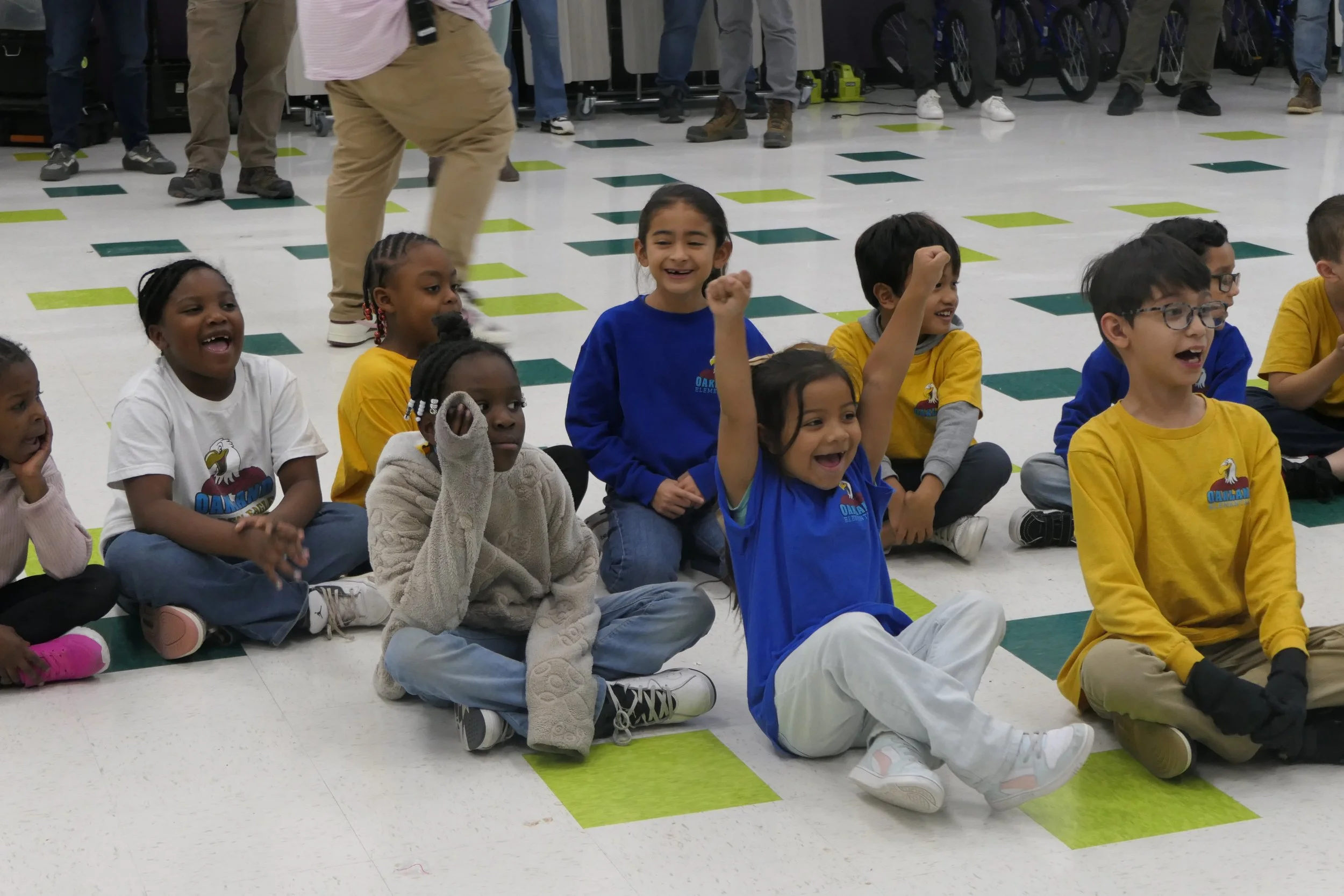
Many team-building events are enjoyable in the moment, but few remain memorable months later. Purpose-driven volunteer experiences create lasting memories because employees know their work directly benefits children and families. That emotional connection transforms the event from a simple workplace activity into a story employees continue sharing long after it ends.
For many participants, the most meaningful part of the experience is seeing the finished bicycles lined up, knowing each one represents an opportunity for a child to experience greater confidence, independence, and joy.
Why Bike Build & Give Events Work So Well for Large Groups
Not every volunteer activity is designed for hundreds of participants.
Bike Build & Give events are intentionally structured to make large-scale participation both organized and engaging.
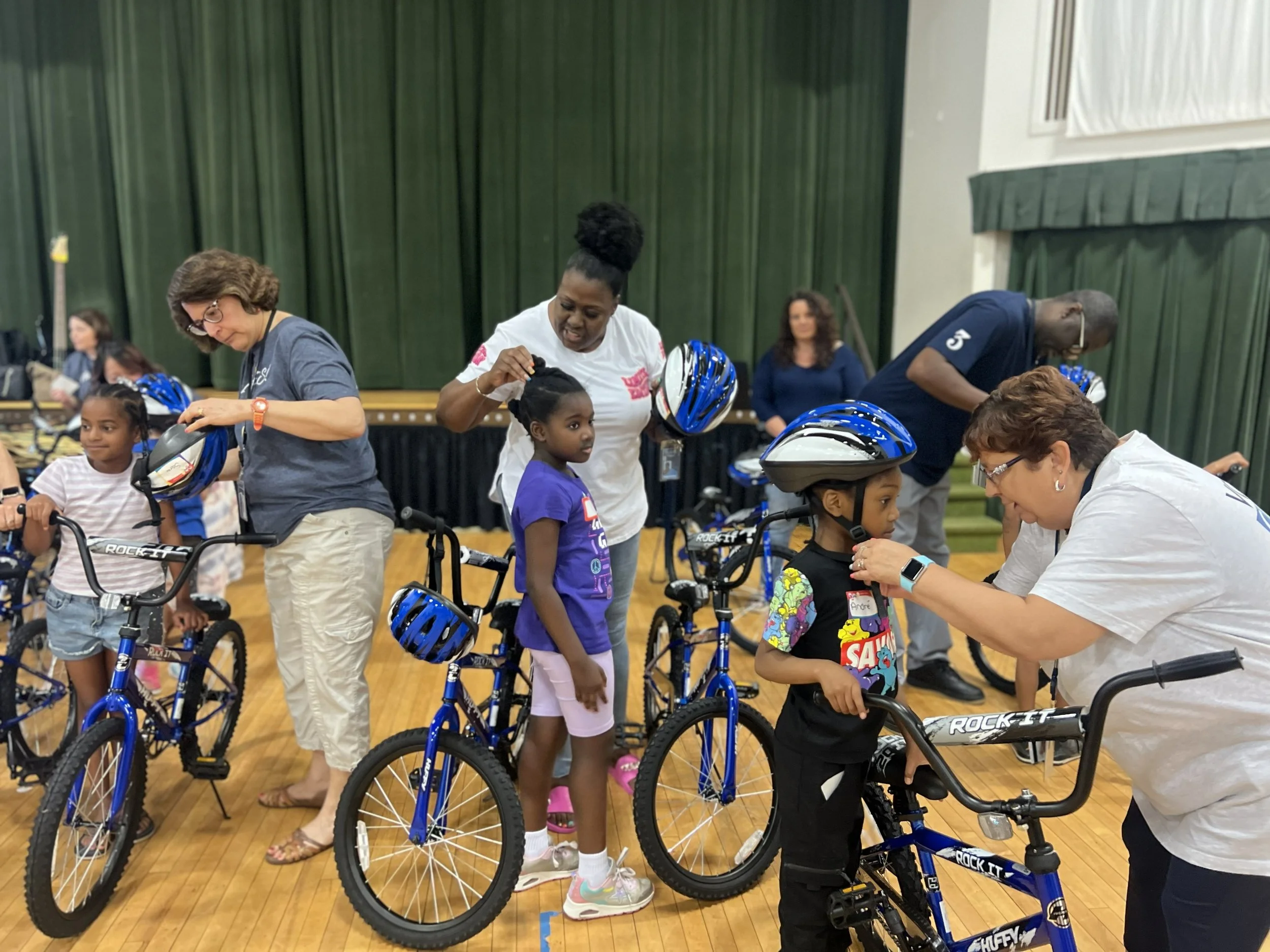
Everyone Has a Meaningful Role
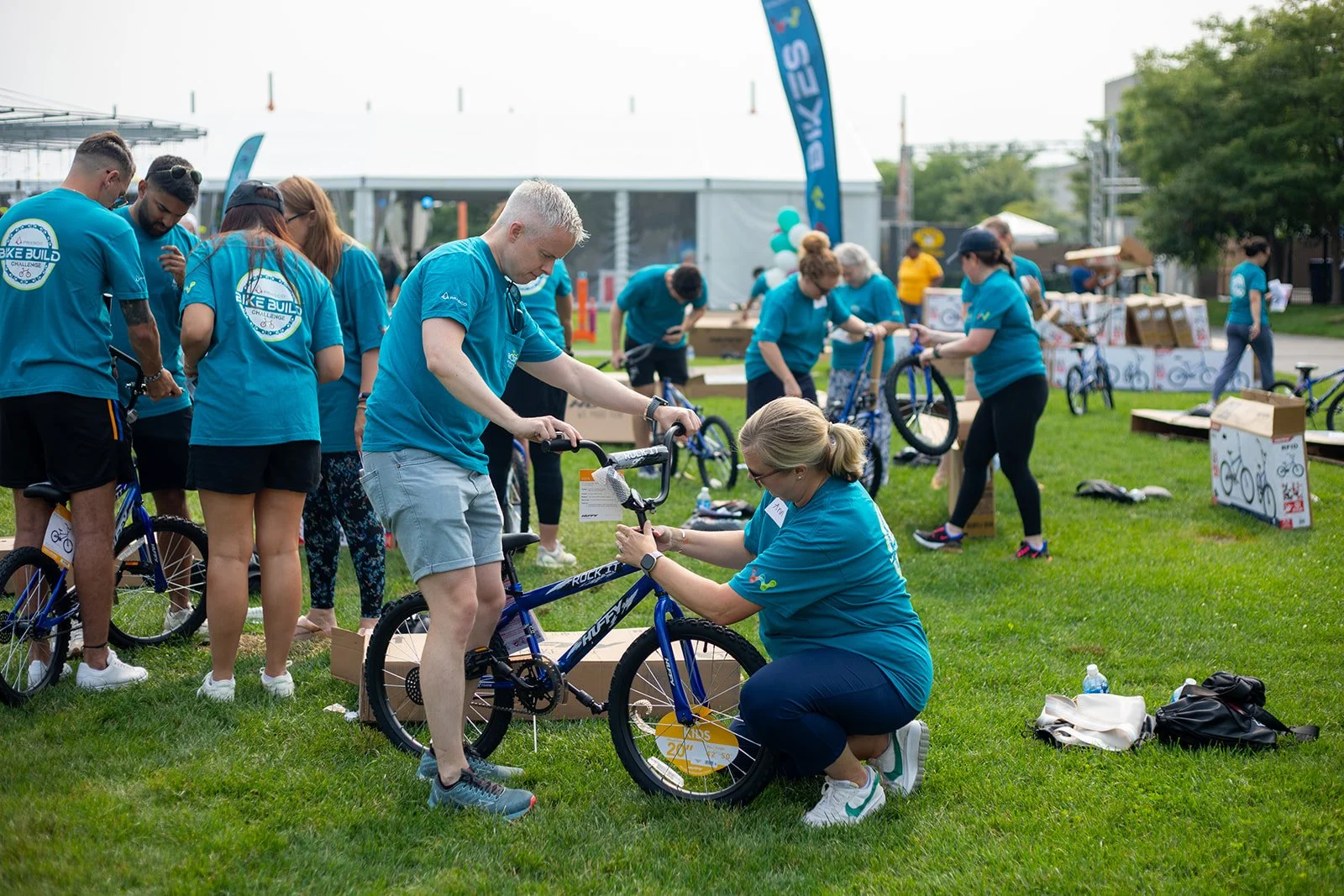
Successful large-group events ensure every participant has an opportunity to contribute. During a Wish for Wheels Bike Build & Give event, employees work in small teams to assemble bicycles together, collaborating throughout the build and working toward a shared goal. This structure keeps participants actively involved while allowing even large groups to feel connected to the same experience and impact.
Easy to Scale
One of the biggest advantages of a Bike Build & Give event is flexibility. Whether your organization has 50 employees or 500 participants, the event structure can be adapted to match your objectives, available space, and schedule. Rather than creating separate experiences for different groups, everyone works toward the same mission. This creates a stronger sense of unity across the organization.
Collaboration Happens Naturally
Unlike competitive activities that emphasize winning, bike build events encourage cooperation.
Employees solve challenges together, communicate openly, and celebrate shared accomplishments.
These interactions often strengthen workplace relationships that continue well beyond the event itself.
Companies that have embraced this approach have found that purpose-driven team building creates stronger engagement than traditional formats. If you're still evaluating options, guidance on choosing a corporate team-building event with lasting value can help you compare different approaches.
The Business Benefits of Team Building Activities for Large Groups
A successful team-building event should do more than create an enjoyable afternoon. It should support broader business objectives while delivering measurable value for employees and the organization.
When planned strategically, team-building activities for large groups can improve communication, strengthen workplace relationships, reinforce company values, and contribute to long-term employee engagement.
Organizations that invest in purpose-driven experiences often discover that the benefits continue long after the event has ended.
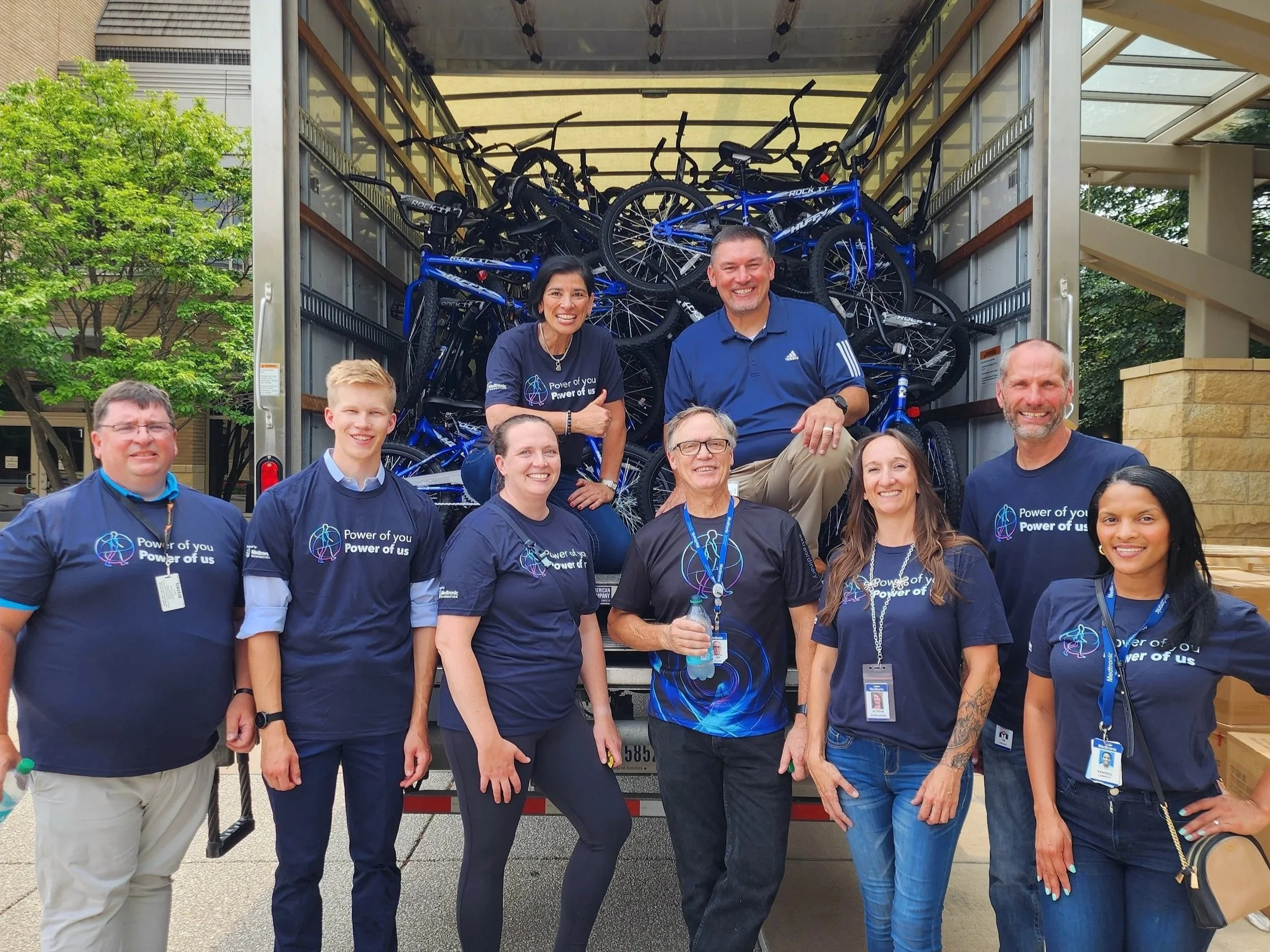
Stronger Employee Engagement
Employee engagement remains one of the biggest challenges facing organizations today.
When employees feel connected to their colleagues and believe their work contributes to a larger purpose, they are more likely to remain motivated and committed to organizational success.
Purpose-driven team-building events create opportunities for employees to experience that connection firsthand.
Rather than simply participating in another workplace activity, employees collaborate on a meaningful project that produces a tangible result for children and local communities.
This sense of purpose often leads to greater engagement than activities focused solely on entertainment.
Better Cross-Department Collaboration
Large organizations frequently struggle with communication between departments. Employees naturally spend most of their time working within their own teams, which can limit opportunities to build relationships across the organization. Large-group team-building events encourage employees from different departments to work together toward a shared objective. These new relationships often continue back in the workplace, making future collaboration easier and improving communication across teams. Companies that have successfully implemented purpose-led team building for modern businesses have found that purpose-driven collaboration naturally strengthens relationships across departments while supporting meaningful community impact.
Reinforcing Company Culture
Company culture is shaped by shared experiences. While mission statements and corporate values provide direction, culture is built through the everyday interactions employees have with one another. Purpose-driven events reinforce positive workplace values by encouraging teamwork, communication, service, and collaboration. Employees leave with shared stories and meaningful experiences that strengthen their connection to the organization. Many organizations also strengthen their employee engagement strategy by incorporating Employee Engagement Through Community Service: Why It Works, demonstrating how volunteer experiences help build stronger workplace cultures over time.
Supporting Corporate Social Responsibility Goals
Many organizations have made Corporate Social Responsibility (CSR) an important part of their business strategy. Employees, customers, and stakeholders increasingly expect companies to make positive contributions within their communities. Bike Build & Give events help organizations align employee engagement initiatives with community impact. Instead of organizing separate volunteer programs and team-building activities, companies can accomplish both objectives through one meaningful experience.
Strengthening Employer Brand
Today's job seekers often evaluate organizations based on more than salary and benefits. Many candidates want to work for companies that invest in employees, support local communities, and demonstrate authentic corporate values. Organizations known for meaningful employee engagement experiences often strengthen their reputation as employers of choice. Purpose-driven events provide authentic stories that employees are proud to share both inside and outside the workplace.
Planning a Successful Large-Group Team-Building Event
Hosting an event for dozens or even hundreds of employees requires thoughtful planning.
The most successful organizations begin by defining clear objectives before selecting an activity.
Start With Your Goals
Every successful event begins by asking an important question:
What do we want employees to gain from this experience?
Common objectives include:
Improving employee engagement
Encouraging cross-functional collaboration
Supporting company culture
Strengthening leadership development
Advancing CSR initiatives
Giving back to the local community
Defining goals early helps determine which activities are most appropriate.
Choose an Activity That Scales Naturally
Some team-building activities become increasingly difficult as participation grows.
Look for experiences specifically designed to accommodate larger groups while maintaining high engagement.
Activities should allow everyone to participate without lengthy wait times or complicated logistics.
Purpose-driven events like Wish for Wheels' Bike Build & Give experiences are specifically designed with scalability in mind, making them suitable for organizations ranging from small businesses to large national companies.
Create Diverse Teams
One of the biggest opportunities during a large event is encouraging employees to interact with colleagues they rarely work alongside.
Rather than organizing teams by department, consider mixing participants from different business units, locations, or leadership levels.
This approach helps build new relationships across the organization.
Communicate Expectations Clearly
Participants should understand both the schedule and the purpose behind the event.
When employees know how their efforts will benefit others, they are often more engaged throughout the experience.
Clear communication also helps reduce confusion and keeps large events running smoothly.
Measure the Results
Planning doesn't end when the event concludes.
Collect employee feedback, review participation levels, and evaluate whether the event achieved its objectives.
Organizations looking for practical guidance can exploremeasuring team-building ROI, including employee engagement, workplace culture, and business outcomes.
Large-Group Team-Building Planning Checklist
Planning becomes much easier when organizations focus on a few essential steps.
| Planning Step | Why It Matters |
|---|---|
| Define event goals | Keeps the experience aligned with business objectives |
| Select an activity that scales | Maximizes participation and engagement |
| Mix employees across departments | Encourages new relationships and collaboration |
| Communicate the purpose | Helps employees understand the impact of their participation |
| Gather employee feedback | Measures success and identifies future improvements |
| Celebrate the results | Reinforces company culture and recognizes contributions |
Following a structured planning process helps ensure employees leave feeling connected, engaged, and proud of what they accomplished together.
Why Organizations Choose Wish for Wheels
Organizations have countless options when planning team-building events.
Many choose Wish for Wheels because the experience combines employee engagement, community impact, and measurable outcomes within one professionally managed program.
A Purpose-Driven Experience
Every Bike Build & Give event helps provide bicycles and helmets to Title I second-grade students.
Employees understand exactly who benefits from their efforts, creating a deeper emotional connection than many traditional activities.
Designed for Large Groups
Wish for Wheels events can be customized for organizations of different sizes.
Whether you're planning an event for 50 employees or several hundred participants, the experience is structured to keep everyone actively involved.
Turnkey Event Management
Planning a large corporate event requires significant coordination. Wish for Wheels works with organizations throughout the planning process, helping manage logistics so internal teams can focus on engaging employees rather than overseeing every detail.
Measurable Community Impact
Every completed bicycle represents a tangible outcome.Organizations leave knowing their investment supported both employee engagement and local communities.This measurable impact makes Bike Build & Give events especially valuable for companies focused on CSR and employee experience initiatives.
Memorable Experiences Employees Talk About
Many workplace activities are enjoyable at the moment but quickly forgotten.
Bike Build & Give events create shared experiences employees continue discussing long after the event concludes because they know their teamwork helped create opportunities for children.
In the final section, we'll summarize why purpose-driven team-building activities continue to outperform traditional formats, answer common questions about planning successful large-group events, and explain how your organization can get started with Wish for Wheels.
Conclusion
As employee expectations continue to evolve, organizations need team-building experiences that go beyond one-time activities. Planning team building activities for large groups requires more than choosing an event that can accommodate hundreds of participants. The most successful experiences bring people together around a meaningful shared purpose while strengthening collaboration, workplace culture, and community impact.
While traditional team-building formats can certainly provide entertainment, they often struggle to create lasting engagement or meaningful organizational impact.
Purpose-driven experiences offer something different.
Build a bicycle: team-building events bring employees together around a common mission while creating a direct and measurable benefit for children in local communities. Participants strengthen communication, develop new workplace relationships, and leave knowing their efforts helped provide a child with greater confidence, independence, and opportunity.
For organizations, the benefits extend well beyond the event itself. Stronger employee engagement, improved collaboration, enhanced workplace culture, and meaningful community impact all contribute to a more connected and motivated workforce.
One of the most rewarding moments during a Bike Build & Give event comes when employees see the completed bicycles lined up and ready for delivery. It serves as a powerful reminder that teamwork can create meaningful change far beyond the workplace.
Rather than simply organizing another company event, organizations have the opportunity to create an experience employees will remember for years while making a lasting difference in the lives of children.
If your goal is to strengthen your team while giving back to the community, purpose-driven team building offers an experience that benefits everyone involved. Whether you're exploringcharitable bike-building, looking for ways to strengthen employee engagement through community service, or comparing different corporate volunteer initiatives, one thing remains consistent: the most successful team-building events are the ones that leave both employees and communities better than they found them.
Frequently Asked Questions
What are the best team-building activities for large groups?
The most effective activities encourage participation, collaboration, and meaningful interaction. Purpose-driven experiences like Bike Build & Give events work especially well because they keep large groups engaged while creating a positive community impact.How many employees can participate in a Bike Build & Give event?
Wish for Wheels events are designed to accommodate organizations of many different sizes. Whether your company has 50 employees or several hundred participants, the experience can be customized to meet your event goals and available space.What size group works best for a bike build event?
Bike build events are highly flexible and can be adapted for both medium-sized and large corporate groups. The event structure scales efficiently, allowing organizations to maintain high engagement regardless of attendance.How long does a large-group team-building event usually take?
Most Bike Build & Give experiences can be completed within two to four hours, depending on group size, event format, and the number of bicycles being assembled. Many organizations schedule them during conferences, leadership retreats, employee appreciation events, or company meetings.How do you keep everyone engaged during a large event?
The key is giving every participant a meaningful role. During a Bike Build & Give event, employees collaborate in teams, complete different stages of the bicycle assembly process, and contribute toward a shared goal that benefits local children.Why are volunteer-based team-building activities more effective?
Volunteer experiences combine teamwork with purpose. Employees not only strengthen workplace relationships but also experience the satisfaction of making a meaningful difference in their communities, creating a deeper emotional connection than many traditional activities.Can Bike Build & Give events support our company's CSR goals?
Yes. Wish for Wheels events allow organizations to combine employee engagement with corporate social responsibility initiatives. Companies strengthen their teams while creating measurable community impact through bicycle and helmet donations.How do bike build events improve workplace culture?
They strengthen communication, encourage collaboration, build trust, and create shared experiences that employees continue talking about long after the event. These experiences reinforce organizational values while creating stronger workplace relationships.How can we measure the success of a large-group team-building event?
Organizations can evaluate success through employee feedback, participation rates, engagement surveys, cross-department collaboration, and workplace culture assessments. For a more detailed framework, read How to Measure the ROI of a Corporate Team Building Event.How can my organization host a Wish for Wheels Bike Build & Give event?
Getting started is simple. The Wish for Wheels team works closely with organizations to plan customized events based on group size, company objectives, and community impact goals. From logistics to execution, the team helps create a seamless experience that benefits both employees and children.
Ready to Plan a Team-Building Event That Works at Scale?
If you're looking for team-building activities for large groups that create lasting value, Wish for Wheels can help.
Our Bike Build & Give experiences bring employees together to collaborate, strengthen workplace relationships, and build bicycles and helmets for Title I second-grade students. The result is a purpose-driven event that supports employee engagement while making a meaningful difference in local communities.
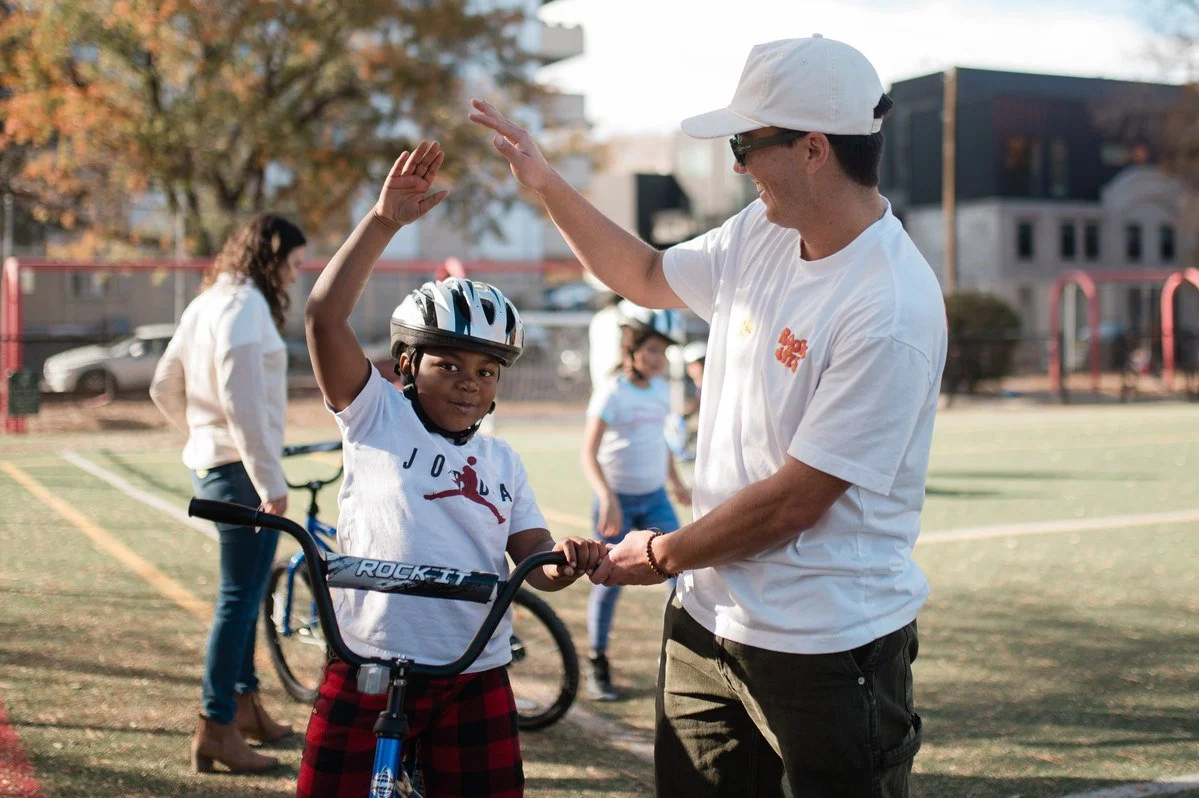
Whether you're organizing a leadership retreat, company conference, employee appreciation day, CSR initiative, or annual meeting, Wish for Wheels can help you create an experience that employees will remember long after the event ends.
Ready to bring your team together around a meaningful purpose? Contact Wish for Wheels today to learn how a Bike Build & Give event can strengthen your workplace culture while creating lasting community impact.
Wish for Wheels believes the most impactful team-building experiences benefit both employees and communities. Every bike built helps create new opportunities for a child while bringing teams together around a shared purpose.
Wish for Wheels is a 501(c)(3) organization. EIN: 59-3803048.
