Build Bikes for Charity: Turning Team-Building into Social Good
Introduction: The Transformation of Corporate Team-Building

For decades, corporate team-building meant off-site retreats, recreational competitions, or social bonding exercises. These traditional team-building events for companies were designed to break routine and improve morale. While many provided short-term enthusiasm, organizations are increasingly questioning whether they create sustained cultural impact.
In today’s business environment, employees expect more than entertainment. They seek meaning, authenticity, and alignment between corporate values and daily experience. As a result, many companies are shifting toward models that integrate collaboration with contribution.
One of the most compelling evolutions in this space is the rise of philanthropic team-building, particularly build a bike initiatives that combine team collaboration with measurable community benefit. These programs reflect a broader shift in how companies think about engagement, culture, and social responsibility.
Why Traditional Team-Building Models Are Losing Impact
Recreational retreats, escape rooms, and competitive games still have a place in workplace culture. However, research consistently shows that temporary excitement does not necessarily translate into long-lasting employee engagement.
Several factors explain this shift:
Employees prioritize meaningful work experiences
Generational workforce changes emphasize purpose
Increased transparency demands authentic corporate behavior
Remote and hybrid work models require a stronger intentional connection
Surface-level engagement strategies may boost morale temporarily, but they often fail to reinforce the company’s mission or long-term collaboration. This is why organizations are rethinking how corporate teambuilding fits within broader cultural strategies.
Modern employee-engagement initiatives increasingly center on shared contribution rather than entertainment alone.
What It Really Means to Build Bikes for Charity
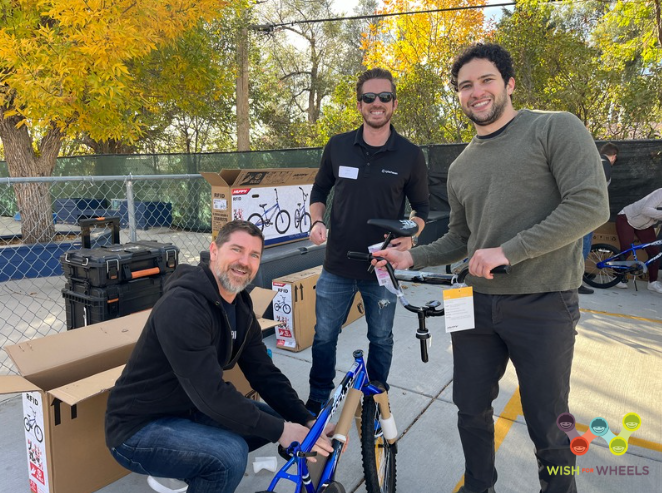
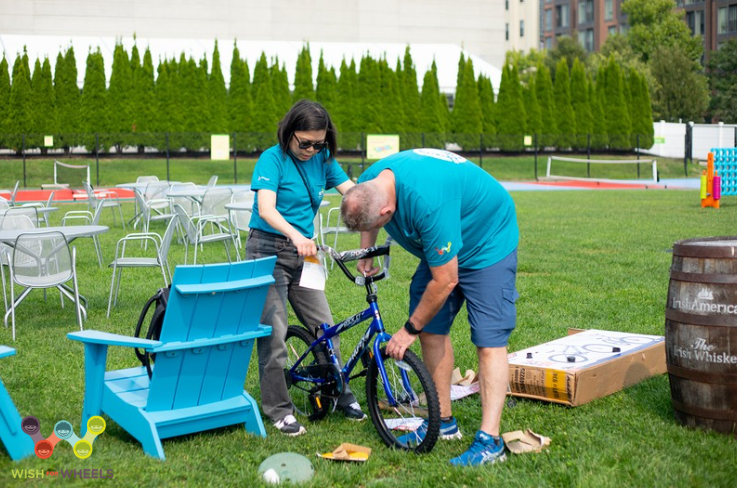
To build bikes for charity is to transform collaboration into a tangible act of service. In programs such as the Wish for Wheels Bike Build & Give, employees work together to assemble bicycles, which are then distributed to children and families in need.
Unlike many charity team-building activities, this model produces a physical, measurable outcome. Teams must coordinate tasks, manage time, ensure safety standards, and deliver a completed product.
This structure creates:
Clear shared goals
Defined roles and responsibilities
Accountability for quality
Visible impact
The experience reinforces both teamwork and purpose. It represents an evolution in how organizations conceptualize corporate team-building, moving from activity-based exercises to purpose-driven engagement.
The Psychology of Purpose and Workplace Engagement
Organizational psychology research demonstrates that purpose is a powerful driver of motivation. Employees are more engaged when they understand how their work contributes to something larger than themselves.
Philanthropic team-building leverages several psychological principles:
Shared Achievement: Working toward a common outcome increases group cohesion.
Tangible Contribution: Physical results reinforce accomplishment.
Empathy and Perspective: Serving others strengthens emotional connection.
Intrinsic Motivation: Purpose activates deeper engagement than extrinsic rewards.
These factors directly influence employee engagement, often leading to improved morale, trust, and collaboration long after the event concludes.
Corporate Social Responsibility as a Cultural Strategy
Modern CSR strategies go beyond charitable donations. They integrate responsibility into:
Supply chain decisions
Leadership accountability
Environmental practices
Community partnerships
Workforce engagement
When CSR is embedded into culture, it becomes a lived experience rather than a marketing message.
Build-a-bike initiatives illustrate how corporate social responsibility can move from theory to action by involving employees directly in impact creation.
CSR Employee Engagement: Moving from Policy to Participation
Programs that invite employees to contribute directly strengthen:
Authenticity
Trust in leadership
Alignment with company values
Cultural cohesion
When CSR becomes experiential, it reinforces identity. Build-a-bike programs exemplify this shift by turning responsibility into hands-on collaboration.
Instead of simply funding initiatives, employees assemble bicycles themselves, creating a deeper connection between policy and practice.
Employee-Engagement Initiatives That Drive Long-Term Results
Companies invest heavily in employee-engagement initiatives, but not all produce sustainable outcomes.
Common approaches include:
Recognition programs
Wellness incentives
Social events
Professional development workshops
While valuable, these initiatives may not fully address the desire for purpose.
Purpose-driven programs, such as the Wish for Wheels Bike Build & Give, align with research showing that meaningful contribution increases employee engagement more sustainably than temporary perks.
Effective engagement strategies typically include:
Clear mission alignment
Measurable outcomes
Collaborative problem solving
Visible results
Build-a-bike models incorporate all of these elements.
How Charity Bike Builds Strengthen Organizational Culture
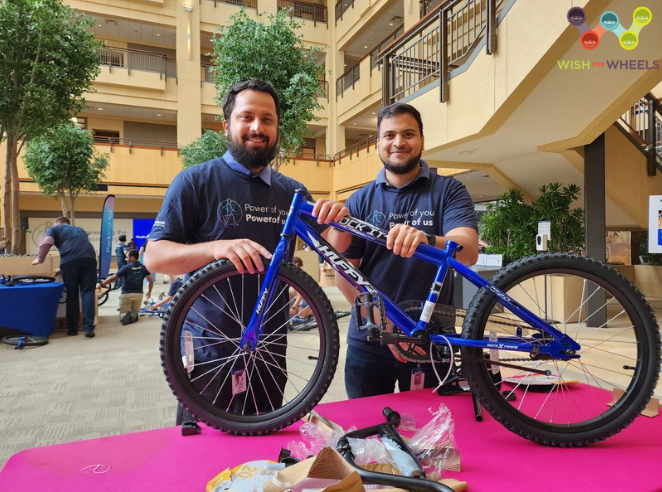
Organizational culture develops through shared experiences. Build-a-bike initiatives including the Wish for Wheels Bike Build & Give program, foster culture by creating an environment where teams collaborate toward a shared purpose.
Teams must:
Communicate clearly
Coordinate tasks
Solve problems in real time
Ensure safety and quality standards
These behaviors mirror workplace dynamics, reinforcing practical competencies.
Across the country, similar frameworks have demonstrated scalability. Programs such as Charity Bike Builds in Houston and Charity Bike Builds in Denver show how this model adapts to local communities while maintaining structural integrity.
This consistency reinforces the broader value of philanthropic team-building as a replicable engagement strategy.
Measuring Business Outcomes and Social Impact
Organizations increasingly demand measurable ROI from corporate team-building investments.
Build a bike programs can be evaluated through:
Engagement survey improvements
Participation rates
Retention statistics
Cross-department collaboration metrics
CSR alignment benchmarks
On the social side, measurable impact includes:
Number of bicycles delivered
Community partnerships strengthened
Youth mobility support
By linking cultural metrics with social outcomes, companies integrate corporate social responsibility into performance measurement frameworks.
Regional Success Models: Houston, Denver, and Beyond
The build-a-bike model has proven adaptable across diverse markets.
In Texas, Charity Bike Builds in Houston meet community mobility needs while fostering meaningful collaboration among corporate teams.
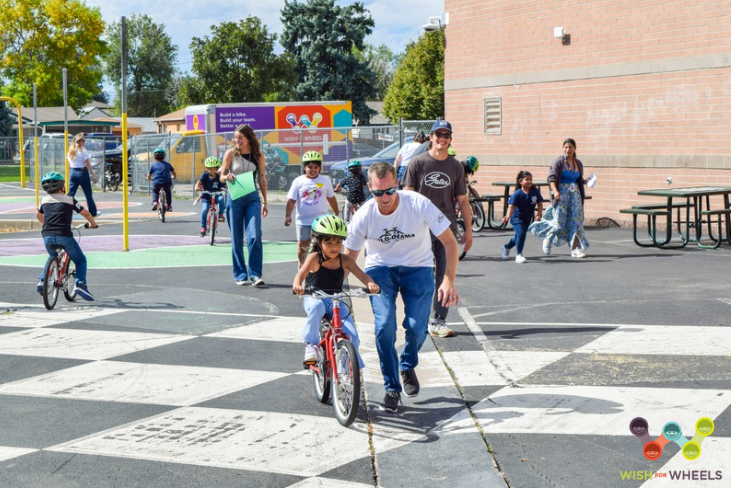
In Colorado, Charity Bike Builds in Denver aligns with youth development initiatives and local equity goals.
These examples demonstrate scalability. While community contexts differ, the foundational elements remain consistent:
Collaborative assembly
Tangible output
Direct beneficiary impact
Regional adaptation strengthens relevance without compromising engagement structure.
The Future of Philanthropic Team-Building
As workforce expectations continue evolving, purpose-driven engagement is likely to become standard rather than exceptional.
Future trends may include:
Greater integration of CSR into talent strategy
Expanded use of purpose-driven collaboration models
Increased measurement of cultural ROI
Cross-regional expansion of team-building programs
Philanthropic team-building reflects the convergence of responsibility and performance. It signals a broader cultural shift in how organizations approach corporate team-building.
Companies today are looking for team experiences that bring people together while also making a positive difference in the community. Build-a-bike charity events have become one of the most effective ways for organizations to achieve these goals. By combining team collaboration with community service, companies can strengthen employee relationships while contributing to a tangible social outcome.
This is where organizations frequently turn to Wish for Wheels, whose programs are designed specifically to help companies transform traditional team-building into purpose-driven experiences that benefit both employees and local communities.
Why Organizations Choose Wish for Wheels
Since 2004, Wish for Wheels has delivered thousands of bicycles through its Wish for Wheels Bike Build & Give program across the United States. Organizations across the country partner with Wish for Wheels because the program combines meaningful community impact with professionally facilitated team-building experiences. Companies are able to engage employees in hands-on collaboration while directly supporting children and families in their communities.
Key reasons organizations choose Wish for Wheels include:
National Operation
Wish for Wheels delivers corporate bike build programs across multiple states, including Utah, California, Texas, Colorado, and other regions. This national reach allows companies with distributed teams to implement consistent engagement programs across offices.
Organizations from industries such as technology, healthcare, finance, and manufacturing partner with Wish for Wheels to align employee-engagement initiatives with community impact.
Hands-On Facilitation
Every event is guided by experienced Wish for Wheels facilitators who manage logistics, structure collaboration, and maintain energy throughout the build process.
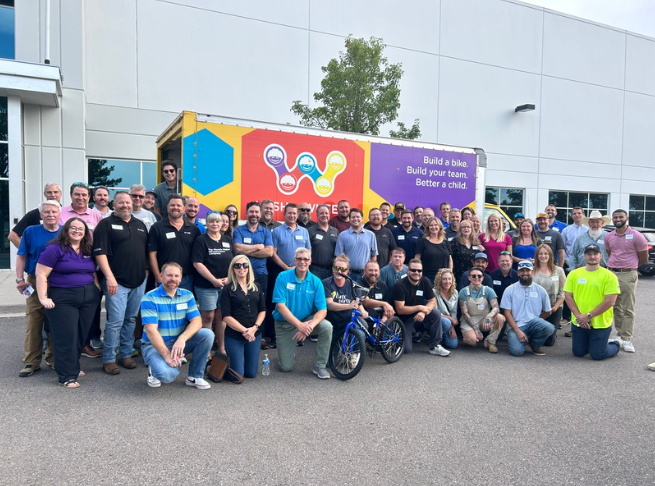
Programs are designed to accommodate groups of many sizes, from small leadership teams to large corporate gatherings, while maintaining an engaging and well-organized experience.
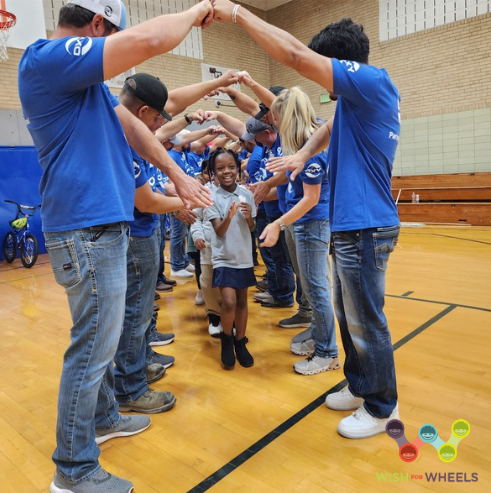
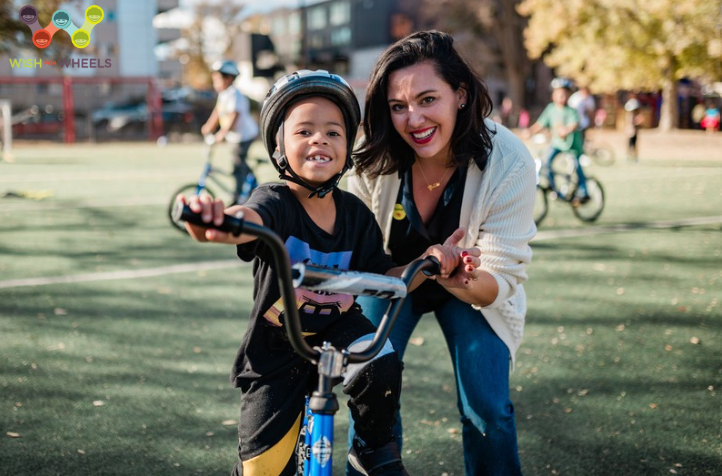
Whenever possible, employees participate in the bicycle presentation itself, allowing teams to witness the immediate impact of their efforts and strengthening the connection between teamwork and community contribution.
Conclusion: From Team Activity to Social Impact Strategy
Building bikes for charity is more than a symbolic gesture. It represents a strategic evolution in workplace culture.
By combining meaningful collaboration with measurable community contribution, organizations strengthen internal cohesion while advancing corporate social responsibility objectives.
When impact and engagement intersect, workplace engagement becomes more sustainable and authentic.
For companies seeking corporate team-building activities that generate real community impact, build a bike programs represent one of the most effective engagement strategies available today.
Frequently Asked Questions
What makes building bike programs different from other charity team-building activities?
Unlike many charity team-building activities, build a bike initiatives produce a tangible product that directly benefits communities, increasing visibility and accountability.How does this support corporate social responsibility?
It operationalizes corporate social responsibility by engaging employees directly in impact creation rather than limiting CSR to financial support.Do these programs improve employee engagement?
Research suggests that purpose-driven engagement models often lead to stronger and more sustained employee engagement.Are build-a-bike initiatives scalable?
Yes. They can be implemented across industries and regions, including programs like Charity Bike Builds in Houston and Charity Bike Builds in Denver.How do companies measure impact?
Impact can be evaluated using engagement surveys, retention data, CSR benchmarks, and community delivery metrics.
