
Build Bikes Charity California: Purpose-Led Team Building for Modern Businesses
Introduction: The Rise of Purpose-Led Business in California

California has long been recognized as a global leader in innovation, sustainability, and socially conscious enterprise. From Silicon Valley technology firms to mission-driven startups and multinational corporations headquartered in Los Angeles and San Diego, the state’s business culture increasingly reflects a commitment to impact alongside profitability.
This shift has influenced how organizations approach corporate team building. Traditional recreational retreats and social outings once defined most team-building events for companies, but many leaders now question whether those models produce lasting engagement or cultural alignment. Modern workforces, particularly in California, expect their employers to demonstrate purpose, equity, and responsibility.
As values-driven corporate culture gains momentum, businesses are exploring engagement strategies that integrate collaboration with community contribution. Instead of separating performance from impact, businesses are looking for experiences that strengthen both.
In this context, purpose-led team building has emerged as a meaningful evolution in workplace culture development. It reflects a broader recognition that authenticity and social responsibility increasingly tie engagement, retention, and long-term organizational strength.
What Is Purpose-Led Team Building?
Purpose-led team building represents an evolution from entertainment-based activities to mission-driven collaboration. Historically, corporate retreats focused on recreation, competition, or informal bonding. While these formats can temporarily boost morale, they often lack sustained impact.
In contrast, philanthropic team building integrates structured collaboration with measurable community benefit. Rather than gathering employees for isolated volunteer hours, this approach intentionally aligns teamwork with purpose. Participants contribute to a tangible outcome while developing communication, leadership, and coordination skills.
This shift also reflects broader changes in corporate social responsibility practices. Organizations are increasingly moving beyond transactional CSR, such as one-time donations or sponsorships, and toward engagement models.
Unlike traditional volunteer days, charity team-building activities are designed with strategic objectives. They require coordination, defined roles, shared accountability, and defined outcomes. These characteristics transform team building from a social event into a cultural investment.
Purpose-led formats encourage employees to see the direct results of their collaboration, reinforcing both internal cohesion and external impact.
The Role of Corporate Social Responsibility in Modern Business

Over the past decade, CSR has shifted from a peripheral initiative to a strategic imperative. Once primarily associated with philanthropy or compliance reporting, CSR is now deeply embedded in business operations and brand identity.
More and more, modern businesses are incorporating CSR into their hiring, leadership development, supply chain decisions, and ways to get employees involved. Investors and consumers alike evaluate companies not only on financial performance but also on social contribution.
Studies show that businesses that have built in CSR strategies tend to do better in the long run. Frequently cited outcomes include enhanced reputation, improved employee retention, and increased stakeholder trust.
A growing focus within this evolution is CSR employee engagement. Rather than limiting responsibility initiatives to executive-level planning, organizations are creating opportunities for employees to participate directly. When CSR becomes experiential rather than symbolic, it tends to generate deeper cultural resonance.
Build-bike charity models illustrate how CSR can be operationalized. Employees collaborate in organized settings that produce real community benefits. In doing so, they experience CSR not as policy, but as practice.
This integration of responsibility and participation represents an important evolution in how businesses approach organizational culture.
Why Build Bikes Charity Models Are Gaining Attention in California

Build a bike charity programs have attracted attention in California because they combine structure, visibility, and visible impact. In a business environment that values innovation and accountability, these characteristics are particularly relevant.
From a workplace perspective, these programs succeed because they incorporate:
Collaboration under pressure
Shared ownership of a defined outcome
A finished bicycle ready for delivery
Community visibility and direct beneficiary impact
These elements tap into psychological drivers associated with motivation and contribution. Organizational behavior studies demonstrate that individuals become more engaged when their efforts yield visible results.
Researchers are increasingly documenting the connection between purpose and employee engagement. When employees understand how their collaboration benefits others, they often report stronger emotional investment and higher satisfaction.
Build-a-bike charity initiatives offer both process and product. Teams navigate tasks while producing something meaningful. Companies looking for effective engagement strategies find the format appealing due to its dual focus on impact and skill development.
In California, where workforce expectations emphasize social contribution, these models align naturally with cultural priorities.
Employee Engagement Initiatives That Actually Work
Organizations regularly invest in various employee engagement initiatives, ranging from wellness programs to incentive structures and social gatherings. While these initiatives can improve morale temporarily, their long-term influence varies.
Surface-level perks often fail because they lack connection to deeper values. Engagement that depends solely on entertainment or compensation may not sustain motivation during periods of organizational change or challenge.
Research increasingly supports meaning-driven engagement models. Employees are more likely to remain committed when they perceive their work as aligned with a broader purpose. Facilitated, impact-oriented experiences create this alignment more effectively than passive programs.
Build-a-bike charity programs demonstrate how experiential collaboration can outperform traditional formats. Participants are not merely attending an event; they are contributing to a measurable outcome. This active involvement strengthens employee engagement by reinforcing agency and shared achievement.
When embedded in larger engagement frameworks, purpose-led initiatives can complement other strategies, such as leadership development and performance recognition.
The result is a more cohesive approach to workforce engagement, one that balances morale, meaning, and meaningful community impact.
Community Impact and Regional Adaptation
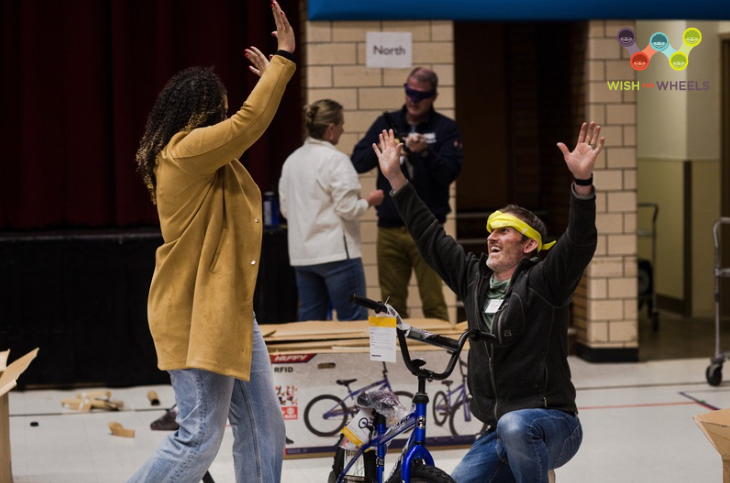
California’s diverse communities face varied challenges, including youth mobility gaps, access to safe recreation, and equity in health outcomes. Build a bike charity initiatives address several of these issues by providing bicycles that support physical activity and independence.
Importantly, the model is adaptable. Comparable frameworks have proven effective in other regions through Charity Bike Builds in Houston and Charity Bike Builds in Denver. While community needs differ geographically, the structural elements remain consistent:
Team-based assembly
Meaningful deliverables
Direct community benefit
Regional programs adjust beneficiary partnerships and delivery logistics while maintaining collaborative integrity.
This adaptability demonstrates that corporate team-building initiatives can scale across markets without losing impact.
California organizations examining these examples often view them as part of a broader, replicable approach to purpose-led engagement.
Anatomy of a Build Bikes Charity Experience
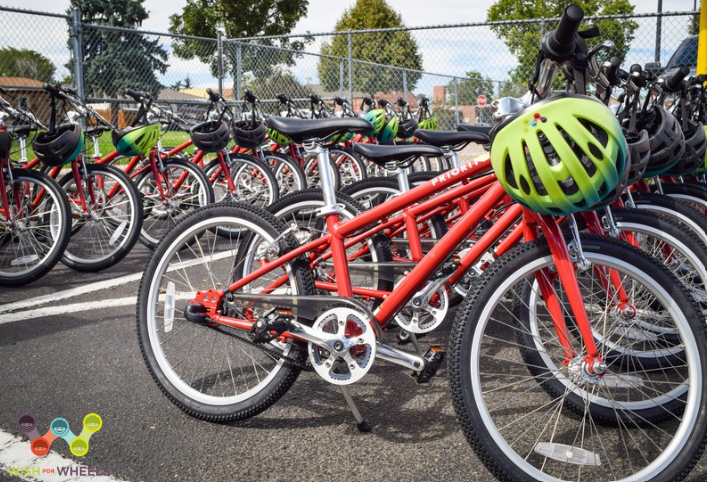
A typical Build Bikes charity experience in California follows a guided progression:
Strategic alignment with CSR goals
Team formation and project briefing
Coordinated bike assembly
Safety inspection and quality review
Community delivery and team reflection
Each stage reinforces accountability and shared responsibility. Teams must communicate clearly, manage time effectively, and maintain quality standards throughout the process.
This framework distinguishes build a bike programs as one of the more results oriented forms of corporate team building. Unlike loosely organized events, outcomes are clearly defined by the number of bicycles assembled and delivered to the community.
Reflection sessions further deepen the experience by encouraging participants to assess collaboration dynamics and overall impact.
From an educational perspective, the program functions as both experiential development and meaningful community contribution.
Measuring Impact: Business and Cultural Outcomes
Organizations increasingly evaluate engagement activities through clear, trackable results. Build a bike programs can be assessed using several indicators:
Post event engagement survey responses
Participation rates
Retention metrics
Cross functional collaboration improvements
When aligned with broader corporate social responsibility goals, these initiatives also contribute to long term reputation metrics and stakeholder trust.
CSR employee engagement can be evaluated by examining employee perceptions of authenticity and impact involvement.
By embedding build bike initiatives within strategic engagement frameworks, companies move beyond anecdotal success stories toward data informed cultural development.
Measurement ensures that purpose led models are not simply symbolic gestures but integrated elements of organizational strategy.
The Future of Purpose Led Team Building in California
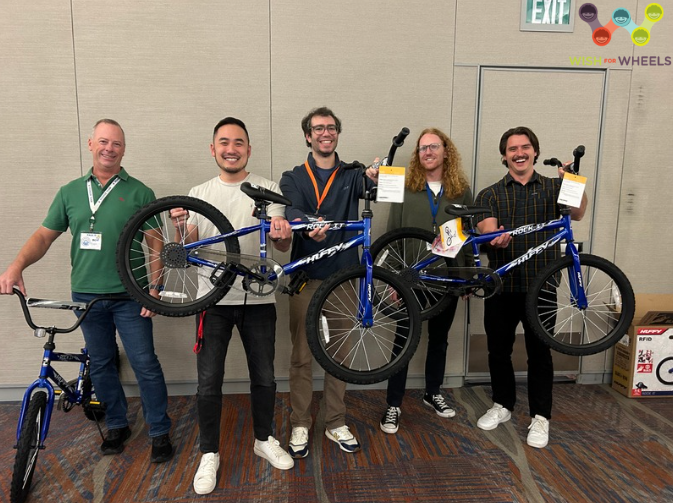
Demand for ethical leadership and socially aligned workplaces is unlikely to decline. Workforce expectations continue to emphasize transparency, inclusion, and community contribution.
Organizations are increasingly viewing philanthropic team building as a viable long term approach, rather than a fleeting trend, as they refine their engagement strategies.
California’s emphasis on innovation and social leadership uniquely positions it to advance these models. Companies can improve their cultural and community ties by adding purpose to team building.
Future engagement strategies will likely prioritize impact over recreational novelty. Purpose led formats represent a convergence of collaboration, accountability, and responsibility.
Conclusion: Purpose as a Strategic Advantage
Purpose led engagement models reflect a broader transformation in how organizations build culture. By aligning collaboration with CSR, companies create environments where contribution and performance coexist.
Build a bike charity programs demonstrate how experiential service can strengthen employee engagement, enhance accountability, and support community impact.
As California businesses continue evolving, integrating purpose into corporate team building represents not merely a trend but a strategic advantage. When engagement and impact intersect, organizations cultivate resilience, authenticity, and long term strength.
Frequently Asked Questions About Build Bikes Charity California
What is the Build Bikes charity program in California?
It is a guided corporate experience where employees collaborate to assemble bicycles for community benefit, combining corporate team building with noticeable impact.How does this support CSR?
It integrates hands on participation into CSR strategies, strengthening CSR employee engagement through direct involvement.How does it influence employee engagement?
Purpose driven employee engagement initiatives improve motivation, collaboration, and cultural alignment.How long do these programs typically last?
Most events run between two and four hours, depending on group size and format.How does this differ from other charity team building activities?
Unlike many charity team building activities, build a bike programs produce a real world result: a completed product that benefits local communities.How does California compare to Charity Bike Builds in Houston and Charity Bike Builds in Denver?
While each region adapts to local needs, the structural framework, collaboration, assembly, and visible impact remain consistent.Are these programs suitable for organizations of all sizes?
Yes. The model can scale from small leadership groups to large enterprise teams while supporting broader CSR goals.
