
How Leadership Shapes Team Building, From Everyday Moments to Intentionally Curated Experiences
There’s a difference between a group of people who work in the same place and a team that genuinely functions together. One is defined by job titles and proximity, while the other is defined by trust, shared purpose, and the kind of everyday connection that fuels resilience and performance. Those are strong teams.
Strong teams don’t come to be by accident. They’re shaped carefully and consistently by the leaders who define expectations, model values, and create the conditions where people actually want to show up and give their best.
As workplaces continue navigating hybrid schedules, rapid technological changes, and the growing need for human connection at work, thoughtful leadership matters more than ever.
Leaders play a critical role in team development, both in everyday experiences and the intentional experiences that are designed with team building in mind. Here’s why:
1. Clarity Sets the Foundation
When people understand where they’re going and why it matters, they feel more grounded and more confident in their work. Day to day clarity centers around expectations that are simple, accessible, and reinforced consistently.
Research from Gallup shows that only half of employees strongly agree that they know what’s expected of them at work, and this lack of clarity remains one of the top barriers to engagement and performance.
Leaders who communicate clearly help eliminate unnecessary confusion so teams can pull in the same direction. This creates alignment, reduces friction, and gives people the confidence to take action without second-guessing themselves.
2. Positive Culture Comes From the Top
Company culture is shaped by the behaviors that leaders demonstrate daily.
A positive work culture rooted in trust, respect, and collaboration, has been linked to higher engagement, lower burnout, and greater overall team morale. A 2023 MIT Sloan Management Review analysis found that workers who feel respected are more than twice as likely to be satisfied in their roles and stay with their employer.
Leaders influence culture not by enforcing it, but by modeling it. When leaders practice transparency, listen actively, and recognize effort, they create an environment where employees feel valued, and valued employees show up differently.
3. Relationships Drive Engagement
Teams become strong when the people inside them feel connected, not just professionally, but as human beings.
The O.C. Tanner Global Culture Report found that conversations with coworkers are the top source of inspiration for employees, and strong teams have a significant impact on belonging and wellbeing.
Leaders who invest time in building relationships naturally foster more collaborative, supportive teams. When people feel understood, they’re more likely to communicate openly, solve problems together, and support one another through challenges.
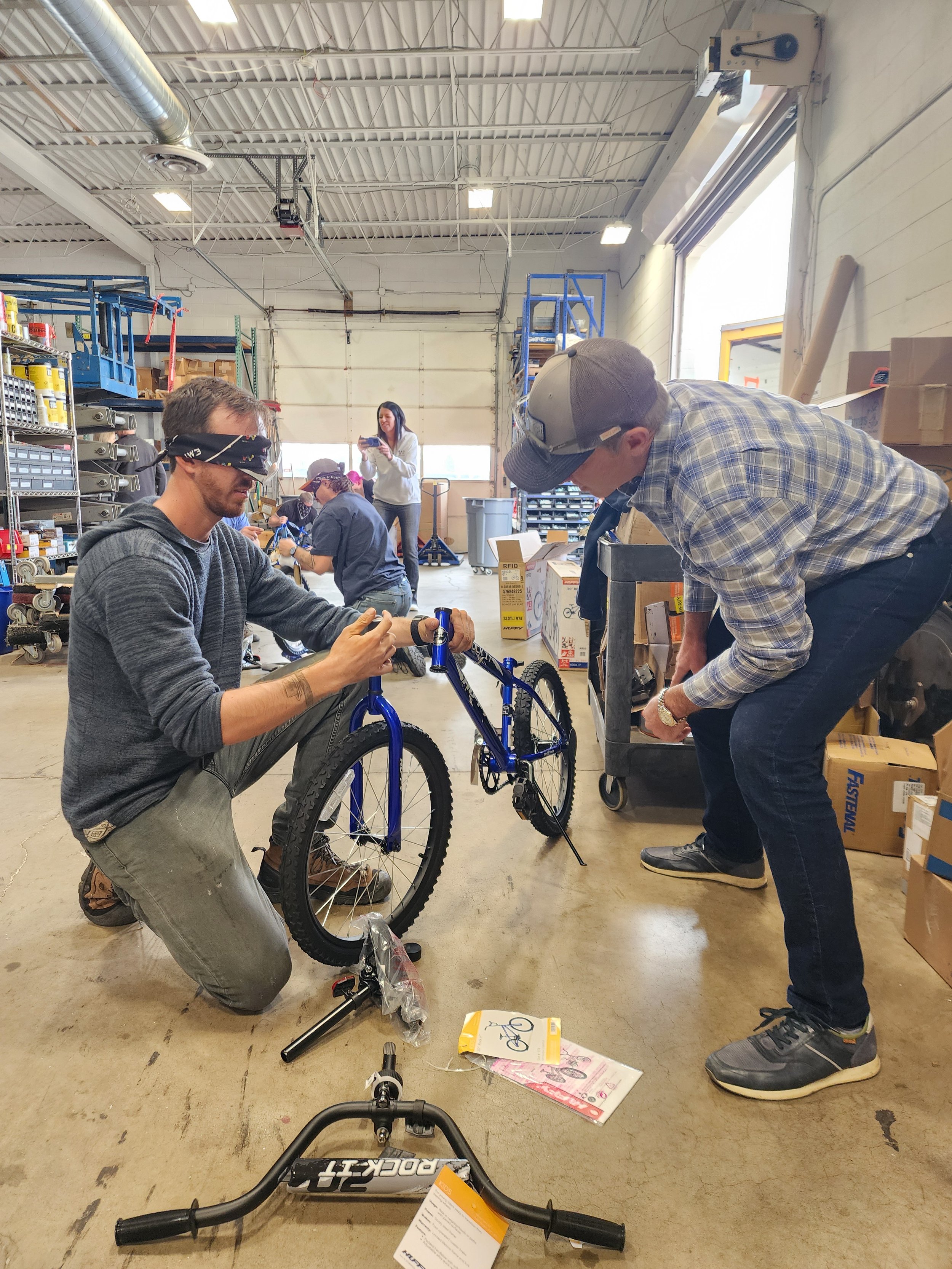
Today, camaraderie is one of the strongest predictors of team engagement. Building connections can happen every day, but creating experiences that intentionally drive connection is key to accelerating the camaraderie that makes teams efficient. One powerful way to do this is through a Team Build & Give experience, where teams come together to build bikes for local children and teach them how to ride.
4. Support Turns Potential Into Performance
Even the most talented teams can’t excel without the right tools, guidance, and resources.
Leaders play a critical role in removing obstacles and ensuring their people have what they need to succeed, whether that’s training, technology, mentorship, or simply the space to do their best work without unnecessary barriers. According to the Harvard Business Review, employees who feel supported by leadership report higher job satisfaction and stronger commitment to their organization.
Support isn’t just operational, it’s emotional. Leaders who recognize their team’s effort, encourage their growth, and advocate for their needs help create an environment where performance naturally rises.
5. Collaboration Fuels Innovation
Teams thrive when they feel safe to share ideas, challenge assumptions, and explore new perspectives. That psychological safety, the trust that one can contribute without risk of embarrassment, has long been identified as one of the core drivers of high-performing teams.
Google’s Project Aristotle found that psychological safety was the number one factor that separated high-performing teams from all others. Leaders who encourage open dialogue, group problem-solving, and shared ownership create an environment where innovation can take root. When people know their ideas matter, they’re far more willing to bring their best thinking forward.
6. Recognition Reinforces What’s Working
People thrive when they feel seen. Recognition, whether big or small, has an enormous impact on motivation. Gallup and Workhuman found that employees who receive meaningful recognition are four times more likely to be engaged and five times more likely to feel connected to their workplace culture.
Celebrating achievements doesn’t have to be a large-scale production. It can be a quick Slack shoutout, recognition during a team meeting, or any other simple thank you that subconsciously works to reinforce positive behaviors and encourage continued effort.
7. Team Building Experiences Create the Conditions for All of This to Thrive
There are some things everyday work simply cannot replicate. Shared experiences, especially those that require collaboration, creativity, and collective purpose, accelerate trust in a way nothing else does.
When teams step outside their usual routines and work together on something meaningful, it breaks down silos, strengthens relationships, and reinforces the culture leaders are trying to build.
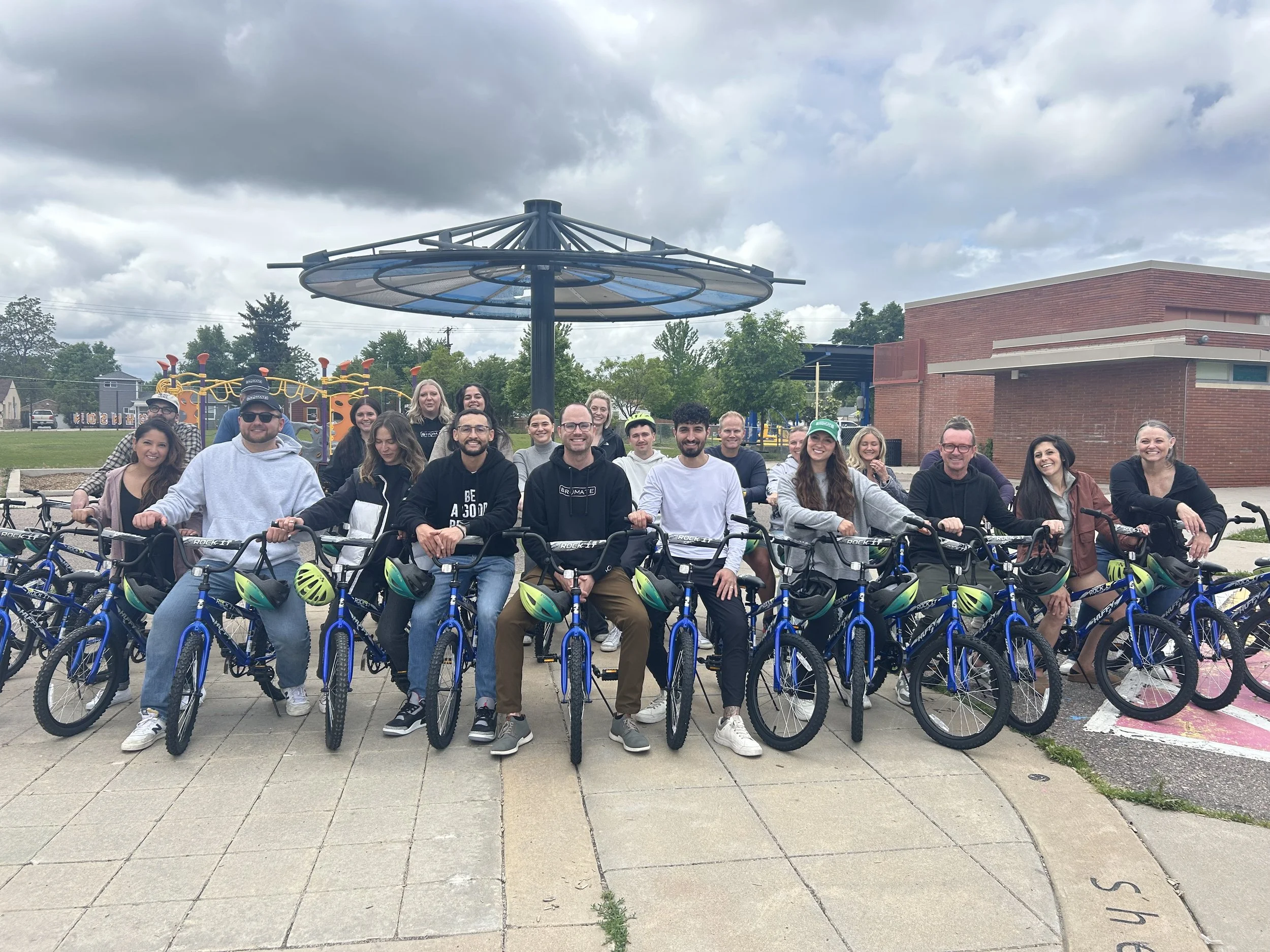
This is where meaningful team building experiences, like a Team Build & Give experience with Wish for Wheels, make a measurable difference.
Teams come together and connect over a collective act of giving. They collaborate to build bikes while engaging in unique challenges, and, when they place a finished bike into the hands of a child who needs it, the shared moment of impact becomes one they carry back into their work with renewed energy, gratitude, and connection.
When leadership is intentional and team building is prioritized, teams become a community that collaborates more confidently, communicates more effectively, and feels genuinely invested in the work they’re doing together. In a time when human connection is becoming an increasingly rare resource at work, these experiences have become an essential piece of creating teams that thrive.
If you’re ready to build a meaningful relationship to your organization, we’d love to help you plan your Team Build & Give experience. Contact us today to learn more!
